SHADOWSLANE

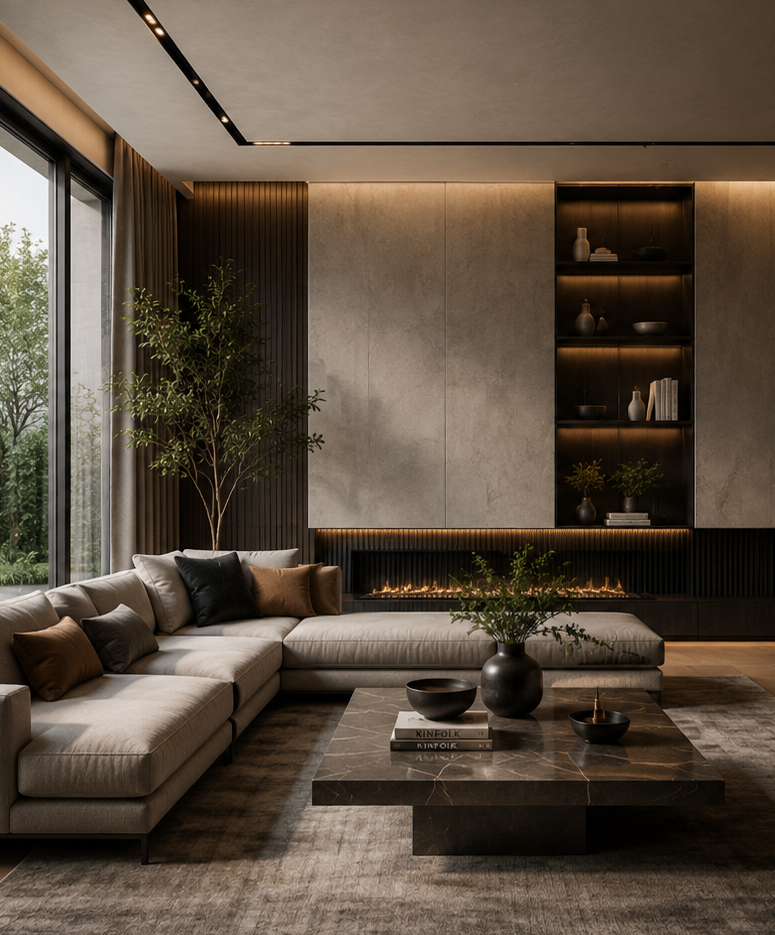
For a long time, interior design was often judged by one question:
Does it look good?
Today, that question is becoming more complicated.
Homeowners are thinking about how a space feels, how it performs in the Indian climate, how easily it can be maintained, how technology can make life easier and whether the materials and furniture will still make sense years from now.
At the same time, there is a growing desire for homes that feel personal rather than copied from a catalogue or social-media mood board.
The modern Indian home is changing.
From “beautiful” to “beautiful and useful”
A well-designed home has always needed to function.
But today’s homeowners are becoming more conscious of it.
Storage, circulation, lighting, acoustics, maintenance, work-from-home requirements and flexibility are increasingly being considered alongside colour palettes and finishes.
This is especially important in urban apartments where every square foot has a job.
A beautiful kitchen that doesn’t accommodate the way a family cooks isn’t successful design.
A beautiful living room with nowhere to put everyday belongings isn’t successful design either.
The visual and functional sides of an interior need to work together.
Natural materials are bringing warmth back
The ultra-minimal, completely neutral interior is giving way to spaces with more texture and warmth.
Wood, stone, woven materials, ceramics, plants and tactile fabrics can make interiors feel less sterile and more connected to their surroundings.
This doesn’t mean every home needs to look rustic.
Natural materials can work equally well in contemporary, minimal, traditional or highly sophisticated interiors.
The important thing is how they are combined.
Sustainability is becoming a design consideration
Sustainable design doesn’t have to mean compromising on aesthetics.
It can mean choosing materials carefully, reducing unnecessary replacement, improving energy efficiency and designing spaces that can adapt rather than needing to be completely redone every few years.
Even small decisions matter.
Durable materials.
Efficient lighting.
Good daylight.
Thoughtful ventilation.
Long-lasting furniture.
Low-maintenance finishes.
Designing for longevity.
The most sustainable interior isn’t necessarily the one with the most “eco-friendly” products.
Sometimes it is simply the one that doesn’t need to be replaced quickly.
Smart homes are becoming less obvious
Smart technology is also entering residential interiors — but increasingly, the goal is for it to disappear.
Automated lighting, curtains, climate control, security and entertainment systems can make everyday life easier without turning a home into a collection of screens and gadgets.
The best smart-home technology often works quietly in the background.
You notice the convenience.
You don’t necessarily notice the technology.
Personalisation is replacing the showroom look
Perhaps the most interesting change is emotional.
People increasingly want homes that feel like their homes.
Not a showroom.
Not an Instagram set.
Not a copy of a Pinterest board.
A home might combine contemporary furniture with inherited pieces. A minimalist living room might include traditional artwork. A modern kitchen might sit alongside handcrafted materials.
There is no reason a contemporary Indian home cannot reflect both global design influences and the people who live inside it.
Design should respond to climate and context
India isn’t one climate, one culture or one way of living.
A home in Delhi experiences a very different environment from one in Bengaluru, Mumbai or Goa.
Sun exposure, ventilation, humidity, dust, heat and seasonal variation can all influence design decisions.
This is where thoughtful architecture and interiors overlap.
The right design isn’t simply imported from somewhere else and placed into an Indian home.
It needs to respond to where the building is, how it is used and who lives there.
The future of Indian interiors isn’t one particular style
It isn’t minimalism.
It isn’t maximalism.
It isn’t luxury.
It isn’t traditional.
The more interesting direction is a combination:
Personal + practical.
Contemporary + contextual.
Technology + simplicity.
Comfort + restraint.
Beauty + longevity.
And perhaps that is what makes the next generation of Indian homes exciting.
The best spaces won’t necessarily be the ones that follow the latest trend.
They will be the ones that understand the people living in them.
At Shadowslane, we believe design begins there.
Hi, this is a comment.
To get started with moderating, editing, and deleting comments, please visit the Comments screen in the dashboard.
Commenter avatars come from Gravatar.